
SERAPION VATSADZE: IN QUEST OF IMPELLING CARACTER
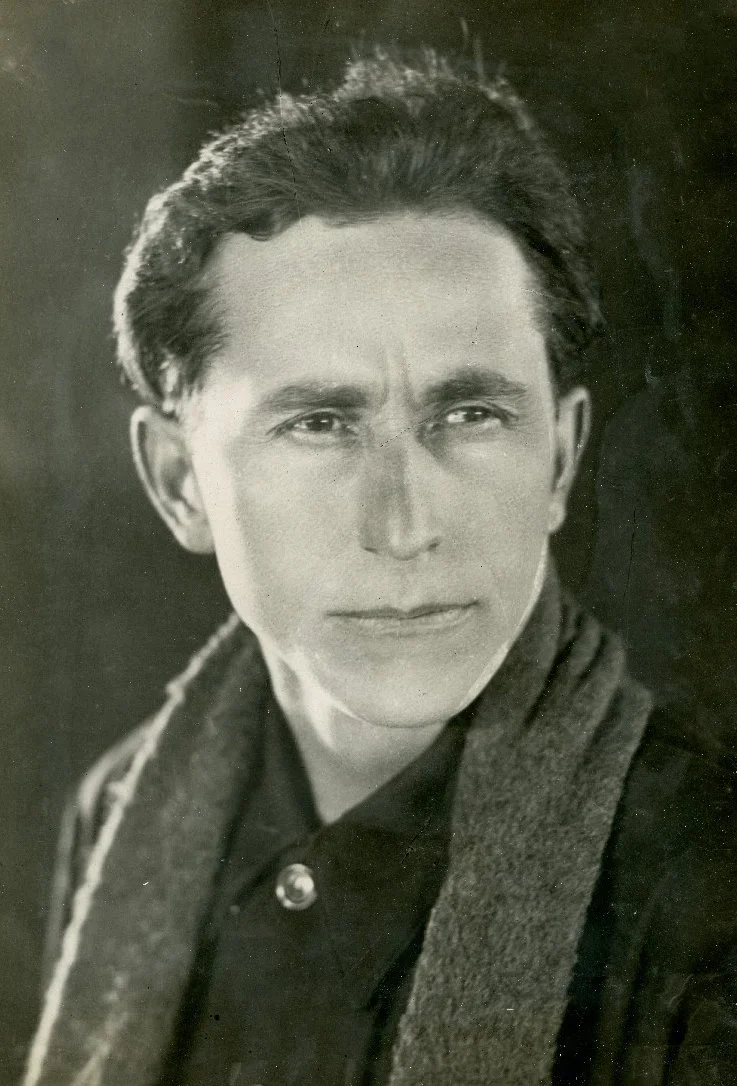
SERAPION VATSADZE
There is hardly any other painter orset designer in the history of Georgian visual arts whose life and activities are so little known, especially given the ever-growing interest in the fields.
Serapion Vatsadze’s works remain understudied, despite his highly stylized and original manner of painting and set design. In fact, he succeeded in changing the established standards of his contemporary period, when, under Social Realism, ideology precluded such endeavors.
The leading set designer at the Kutaisi State Drama Theatre in 1926-7, Vatsadze had deep understanding of the main characteristics of his contemporary avant-garde art – arbitrarinessof expressionism and the role of surrealistic subtexts in a work of art –which before the 1930s, under the Bolshevik regime, when the ideological space was being shaped, required of emerging artists an outstanding gift and vision, if they would ever attempt to employ arbitrary visual language in their works in any possible way.
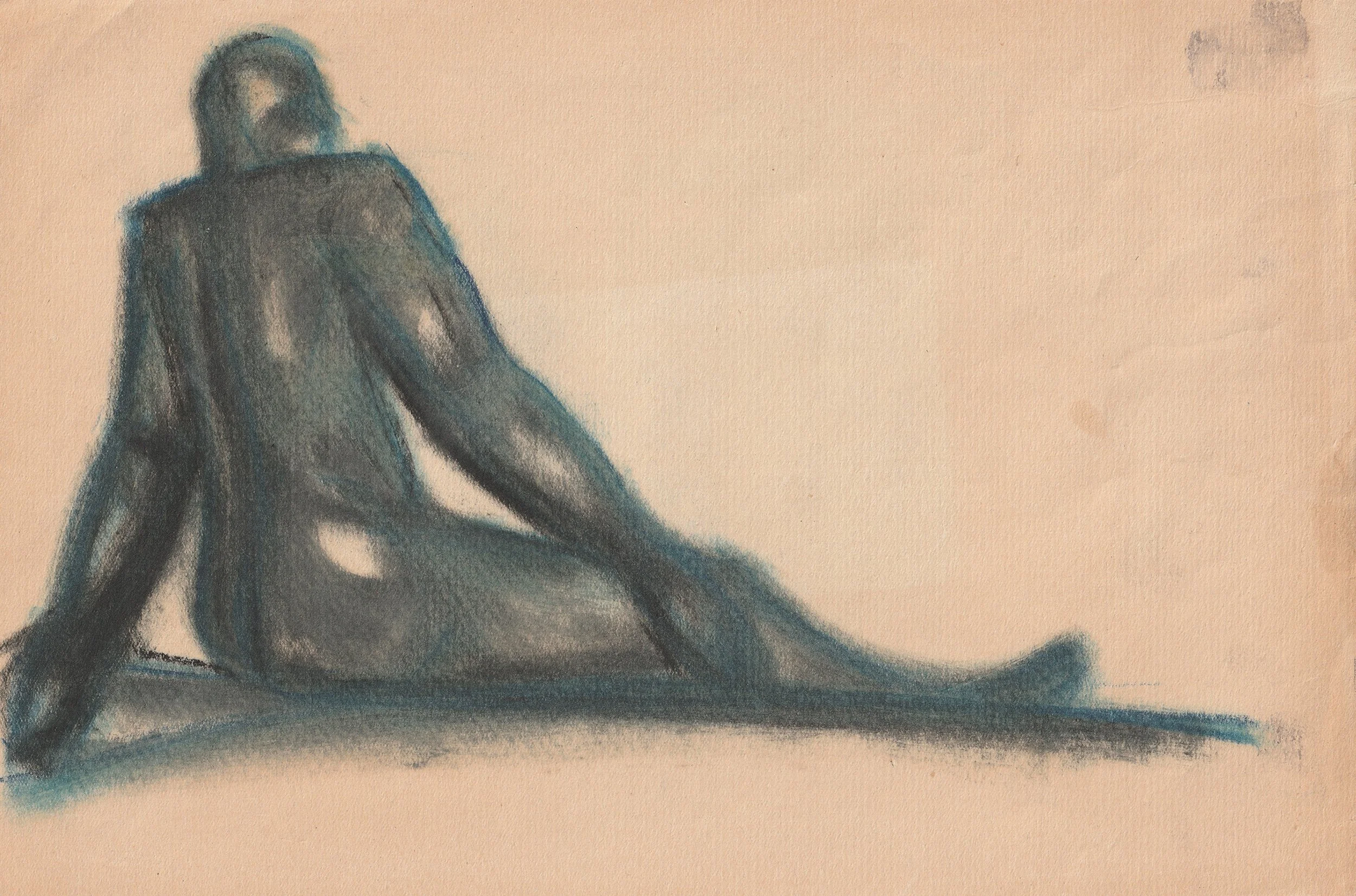
Serapion Vatsadze SKETCH, 1930s. Vernissage Gallery Collection.
Vatsadze’s artistic language and scenic vision did not confine him to one particular artistic trend, as his original style of set design, simultaneously eclectic and austere, was intrinsically different from any manifestation of Sovietor, generally speaking, ideological pathos.
None of his works attempt to adhere to conventional minimalism, a typical trend in the 1920s-30s, at the expense of overloading graphic composition, which can be viewed as a common feature of ideology-ridden art.
In the 1920s, the age of the so-called agitkithat served the purpose of agitprop– Soviet agitation and propaganda – both in film industry and poster pop art, Georgian theatre succeeded in preserving the tradition of the innovative transformation of avant-garde started in Georgia by Kote Marjanishvili and Sandro Akhmeteli. Serapion Vatsadze was closely familiar with various manifestations of the arbitrariness of open space in stage design. Therefore, his filmography is marked by an intentional use of open space and the effect of realism.
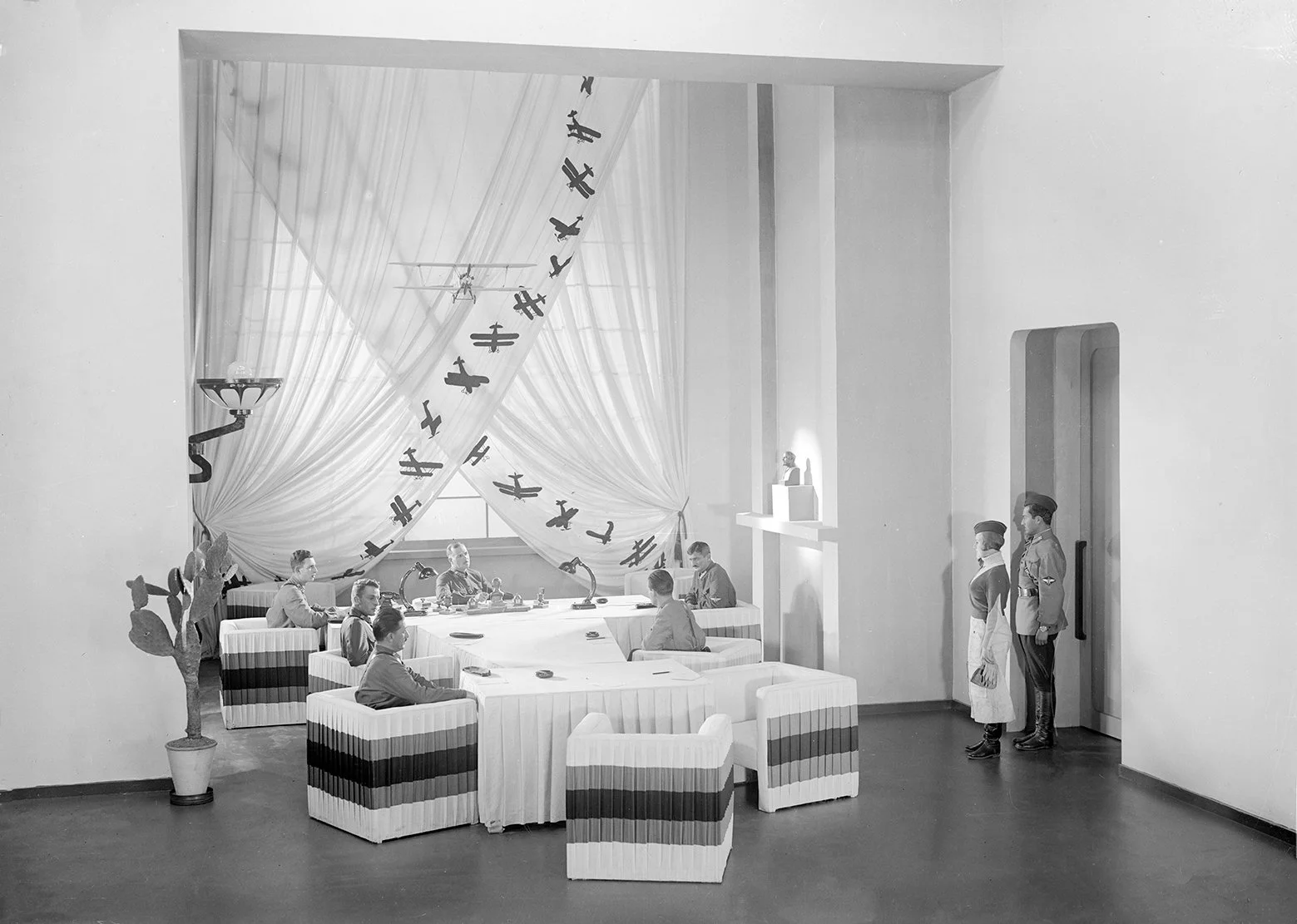
Scene from the 1936 film FLYING PAINTER, Dir.: Leo Esakia, Costume Design: Petre Otskheli. Set Design: Serapion Vatsadze.
Vatsadze’s career in Georgian cinematography and specifically in SakhKinMtretsvi (State Film Industry) started in 1929. Thus, it was in the 1930s, the darkest years of Social Realism, that he joined the world of the Georgian national cinema, which by that time had already developed the tradition of extensionism and the synthesis of fiction and documentary. It was a period when national cinema was forced to succumb to pressure of Stalinism marked by straightforwardness that sought to impose an illusory reality upon viewers.
Vatsadze’s works are neither populist nor conformist. All of the films he designed, irrespective of their artistic value, are marked by graphic realism that equally imbues form and style – whether with respect to interior space or any other element of production design.
Unlike the 1920s and 30s, when ascetic, austere graphic design is to be seen as Vatsadze’s individual vision, in the films of the 1950s it was an already established and entirely realistic style. Yet, in a feature film “Fatima” designed by Vatsadze, objects set against the contrast of light and shadow that dominates interior spaces in a North Caucasian aulseem to be reflections of images trapped in a refracted ray of light. This may well explain the fact that viewers remember the film, most of all, for the unusual appeal of the spaces it features. The ethnic belonging of the film characters is likewise clearly visible in their manners and even in the way they wear clothes.
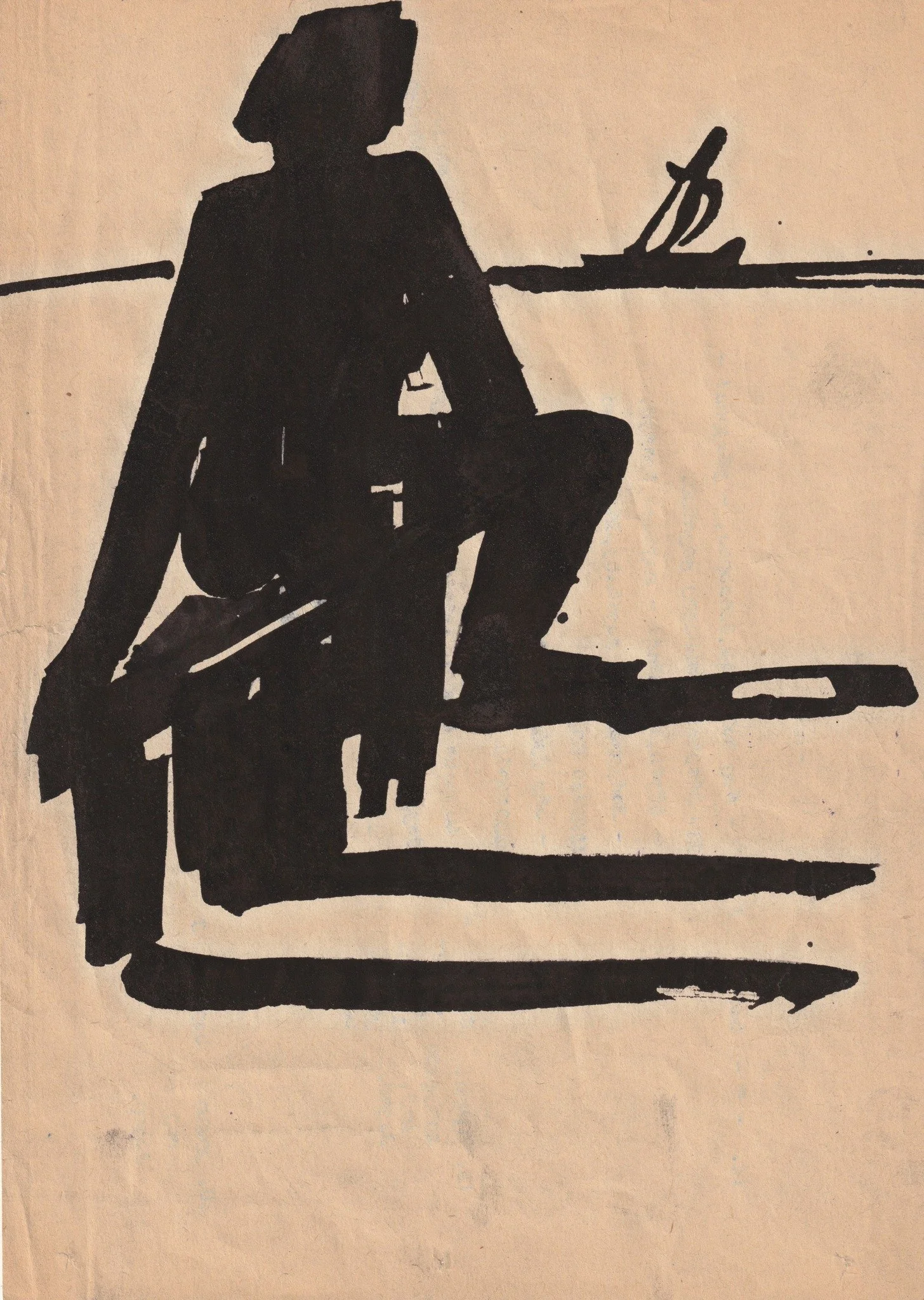
Serapion Vatsadze SKETCH. Private Collection.
Photo Courtesy: Vernissage Gallery.
On the other hand, Vatsadze’s earlier films, “In the Land of Avalanches” (1931) and “The Last of the Crusaders” (1933) are marked by dynamic composition and effects similar to long shots and rhythmic montage.
Of special note is the artist’s attempt to transfer a Soviet narrative, a story typical of Social Realism, into the setting character of David Kldiashvili’s novels and stories (“Fickle Neighbours”, 1945). Likewise remarkable ishis highly sophisticated working “Kind People” (1962), as well as in Mikheil Chiaureli’s famous “You Cannot See What I had Seen” (1965).
The settings in these films are totally different not only because they serve to narrate different stories, but also in terms of the mood they convey and the historical period they refer to. Therefore, it can be argued that scenography plays a key role in the films: Old Tbilisi scenes and the interior of the collapsed noble man or in Mikheil Chiaureli’s film, the details and the sensory experience the film evokes are marked by allegory, while in “Kind People” the designer develops an unusually reserved, austere artistic concept, almost reduced to the contrast of light and shadow, so characteristic of neorealist aesthetics.
These two different production designs point to the artist’s unique cinematographic vision, especially as regards his perception and feel for the environment. Even if considered separately, each scene reflects all features of the fictional world: the historical period, time, mood and character mannerisms.
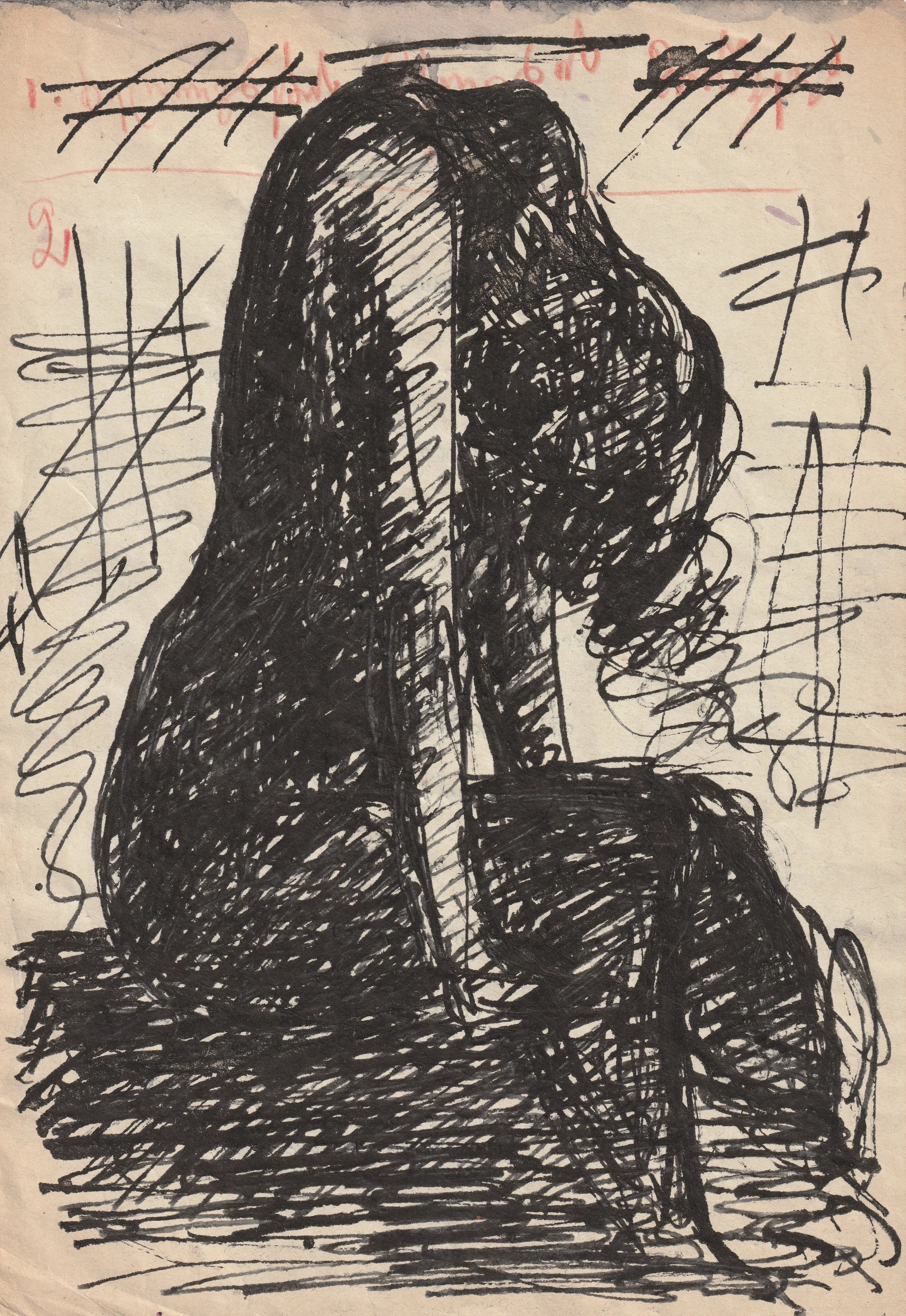
Serapion Vatsadze SKETCH. Private Collection.
Photo Courtesy: Vernissage Gallery.
It can be argued that Vatsadze’s professional profile and his quest for salient features and character traits in every single detail present him as more prone to improvisation than to artistic exploration.
This is evident not only in his filmography but also in his theatre sketches: compositional integrity of his character portraits, landscapes and thematic drawings render impelling emotions. Here too, his conceptual style is prominent, coherent and compositionally impetuous, though always genuine and unaffected.
Vatsadze’s graphic compositions and sketches are marked by extraordinary arbitrariness mirroring the power of arbitrariness in cinema, which, evidently, is an intrinsic quality of his productions. Besides, the foundational artistic principles he employed ensured the unfailing dramaturgical coherence of this works.
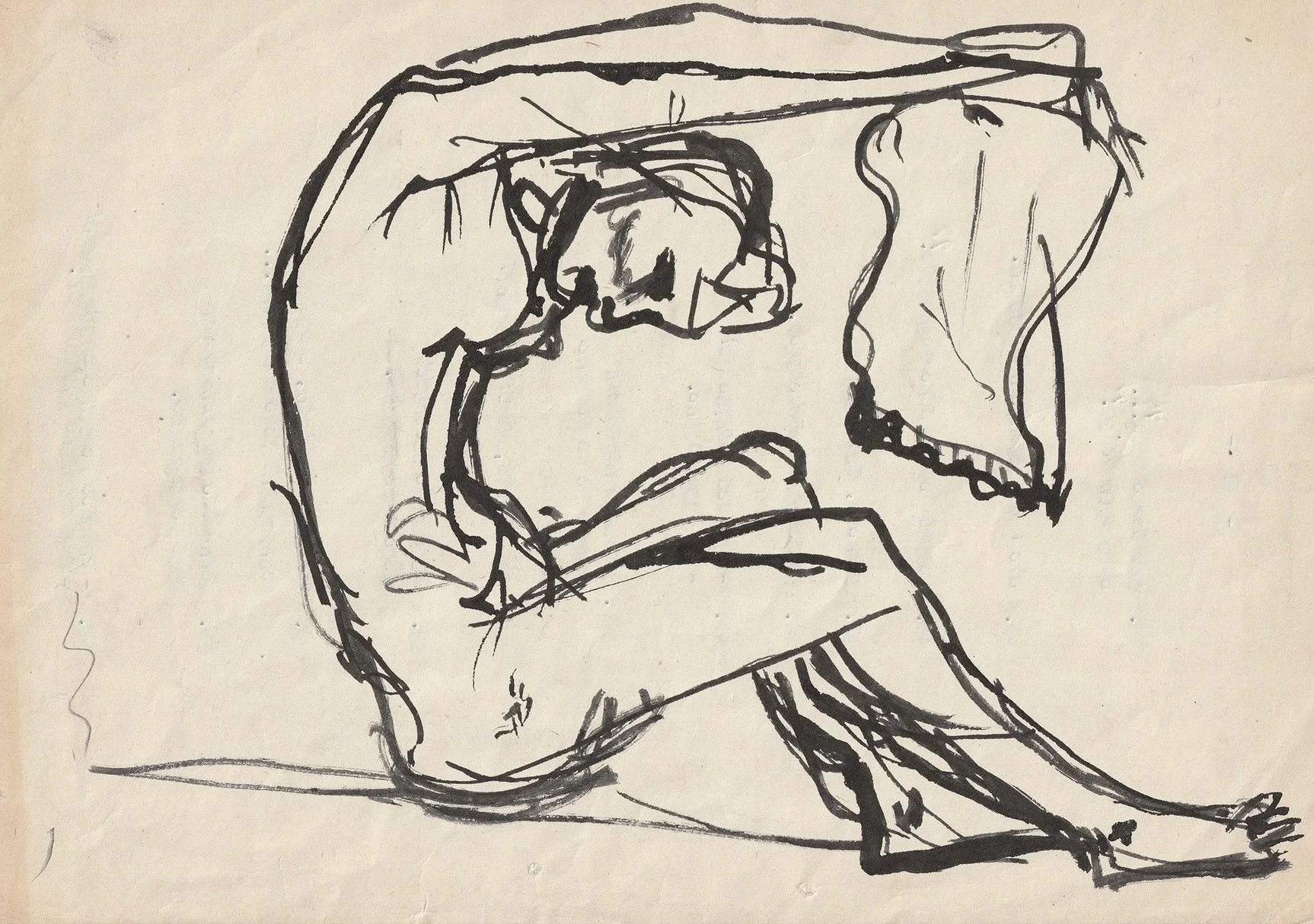
Serapion Vatsadze SKETCH. Vernissage Gallery Collection.
Photo Courtesy: Vernissage Gallery.
In his graphic portraits as well as paintings the artist succeeds in capturing all potent manifestations of character and rendering mood consistently, which is among his major merits. Many of Vatsadze’s works evoke feeling of melancholy, with a slight touch of grotesque realism.
The artist’s legacy has been scarcely studied. Therefore, a closer look at his works not merely promises to spark interest in him, but will shed light on hitherto less known but vigorous developments in Georgian film and set design. Rooted in traditional visions, turns defining 20th century visual arts, including scenic design, frequently entailed dynamic transformations, one of which is vividly manifested in Serapion Vatsadze’s highly original works, marked by vigorous, impelling dramaturgical elements.
NANA TRAPAIDZE
